A landlord asks for an update on arrears at 4.45pm. A property manager searches the CRM, checks the finance system, chases a colleague for a maintenance status, then turns the answer into an email. Nothing about that task is especially difficult. Repeated across a portfolio, however, it becomes expensive, interruptive and hard to scale. That is the real issue behind landlord portal vs manual reporting: not simply how reports are delivered, but how much operational effort is required to keep landlords informed.
For UK letting agents, block managers and portfolio landlords, reporting is part of the service. It shapes whether clients feel in control of their assets, whether teams can focus on exceptions, and whether important issues are spotted early enough to act.
The hidden cost of manual reporting
Manual reporting often starts as a sensible process. A small portfolio may only need a monthly statement, a spreadsheet of maintenance activity and the occasional bespoke update. An experienced property manager knows the properties, knows the landlords and can explain the context behind the figures.
The pressure appears when the portfolio grows, reporting expectations rise or staff capacity tightens. Each update depends on somebody gathering information from several places, checking it, formatting it and sending it on. Even a polished template does not remove the work of finding the latest data or answering follow-up questions.
The cost is rarely recorded as a single line in a budget. It is spread across calls, emails, internal messages and duplicated checks. A team may spend hours every week preparing reports that are already out of date by the time they are sent. Meanwhile, landlords still contact the office for updates because the report does not answer the question they have today.
Manual processes also create a knowledge risk. When one person holds the context for a landlord or building, service quality can dip during annual leave, sickness or staff changes. A colleague may be able to find the numbers, but not the latest conversation, the agreed next step or the reason a repair has been delayed.
Where manual reporting still has a place
Manual reporting is not automatically the wrong choice. A complex leasehold issue, a major works consultation or an unusual tenancy dispute may require a considered narrative rather than a standard dashboard. High-value clients may also expect a scheduled review meeting with commentary and recommendations.
The point is not to remove human judgement. It is to stop using skilled people to repeatedly compile information that systems can present clearly. A better operating model gives routine visibility on demand, then uses manager time where interpretation, action and reassurance are genuinely needed.
Landlord portal vs manual reporting: what changes?
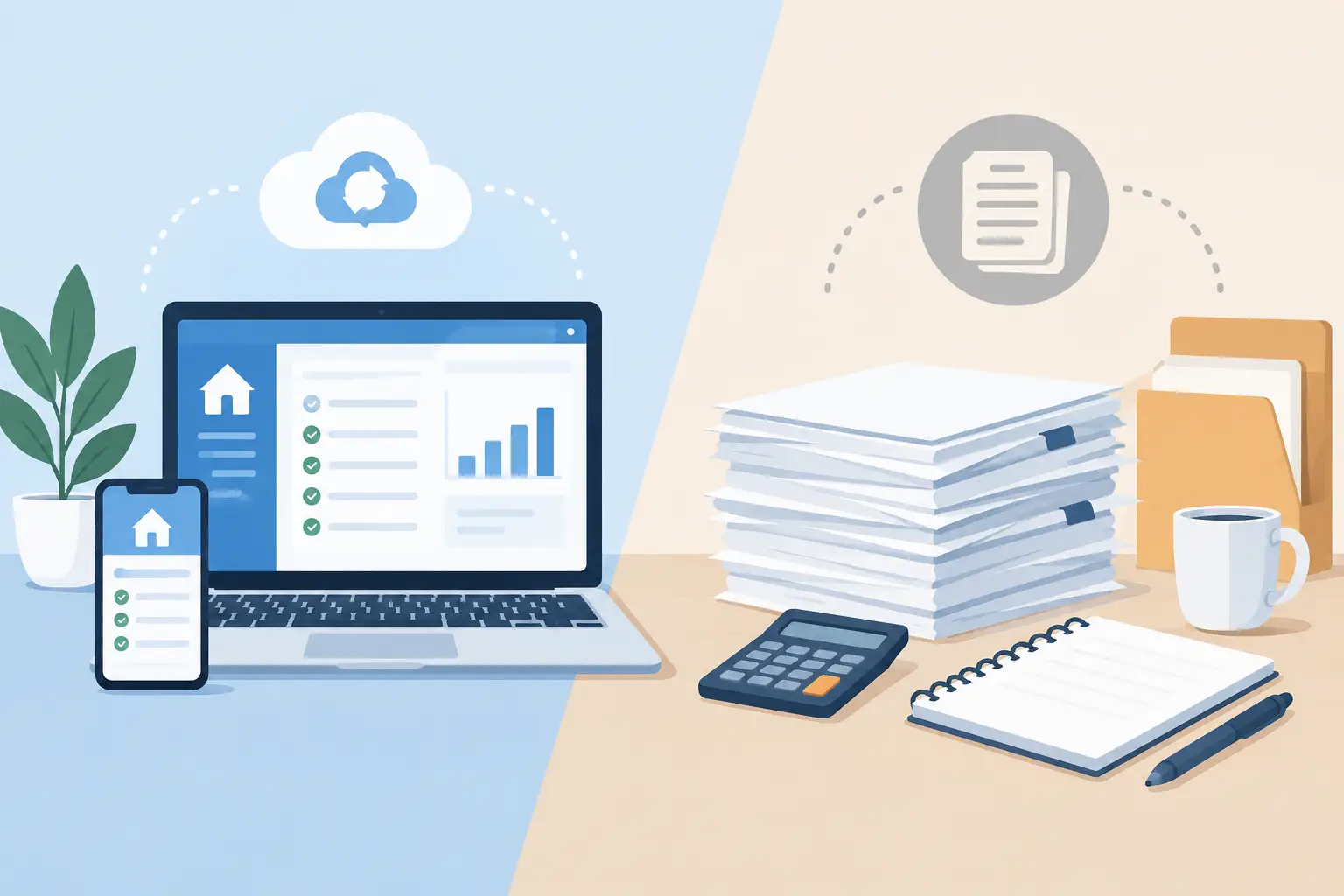
A landlord portal shifts reporting from a scheduled, staff-led task to a shared source of current information. Instead of waiting for the next monthly email or calling for a maintenance update, landlords can view relevant property information when they need it.
For the agency or management business, that changes the flow of work. Teams spend less time responding to routine status requests and more time resolving the issue behind an exception. If arrears increase, a job exceeds its expected timescale or a compliance deadline is approaching, the conversation can begin around action rather than fact-finding.
The difference is especially clear across larger portfolios. Manual reporting scales in a straight line: more properties and landlords generally mean more administration. A well-configured portal can give each landlord visibility without requiring the team to create a separate update every time.
That does not mean a portal should become a document graveyard. Uploading statements to a login area once a month is only a marginal improvement if the data remains fragmented and the landlord still has to email for context. The useful version connects reporting with live operational activity: tenancy information, financial position, maintenance progress, tasks and relevant communications.
Visibility improves confidence, but only when it is reliable
Landlords do not need access to every internal note or every item in a property manager's inbox. They need clear information that helps them understand performance and make decisions. That usually includes rent and arrears status, active maintenance, compliance milestones, key documents and a visible record of what is happening next.
Accuracy matters more than volume. If portal information is incomplete, delayed or inconsistent with the finance system, it can create more calls rather than fewer. The operational benefit comes from a dependable view of data, with clear ownership of updates and sensible permissions for different stakeholders.
For block managers, the same principle applies at building level. Directors and clients need confidence that actions are being tracked, contractors are progressing work and communication is organised. A shared dashboard can reduce the recurring cycle of “please send an update” emails, provided it reflects the live workload rather than a static monthly snapshot.
The commercial case is time, not just presentation
The most visible benefit of a landlord portal is a better client experience. The more immediate benefit is usually internal capacity. Consider a team spending 20 minutes each day locating information and replying to routine landlord queries. Across five people, that is more than eight hours a week before accounting for monthly reporting packs, chaser emails and corrections.
Those hours carry a direct cost, but the larger opportunity cost is responsiveness. When administrators and property managers are tied up reporting known information, they have less time to progress repairs, chase rent, prevent complaints or retain a landlord who is considering another agent.
A portal also creates a more consistent service proposition. One landlord should not receive a detailed update simply because their property manager is organised and available, while another waits because the team is under pressure. Consistent access to information helps protect standards as portfolios and teams change.
There is a retention angle too. Landlords often judge management quality through visibility. They may not see the calls made to contractors, the checks completed or the internal chasing that kept an issue moving. A clear portal makes that activity more visible. It gives the agency evidence of management rather than relying on the client to infer it from a quiet inbox.
What a useful landlord portal needs to do
The right portal is an operational layer, not another isolated system for staff to maintain. If teams must manually rekey updates from their CRM, finance platform and maintenance process, the promised efficiency will disappear quickly.
Look for a platform that works with the systems already used to run the business. Information should be brought together in a way that reduces duplication and gives landlords an appropriate, up-to-date view. Shared communication is equally important. When a landlord query, task and response sit in one organised place, the business is less dependent on individual inboxes.
A practical portal should also support exceptions. Routine information can be available at any time, but a manager still needs a way to flag an issue, assign an action and keep the landlord informed where it matters. Automation is most valuable when it creates the next task, prompts the right person and preserves an auditable record of progress.
Prop Report is designed around this operating model: reducing repetitive administration while improving landlord visibility through shared communication, automated workflows and real-time dashboards. For teams already using established CRM and finance tools, the aim is to improve control without forcing a disruptive replacement project.
How to decide whether the timing is right
The decision is not simply portal or no portal. It is whether the current reporting process is still proportionate to the portfolio and service level being delivered. Start by tracking the work behind reporting for two weeks. Include report preparation, one-off update requests, internal searches, duplicate data entry and follow-up questions.
Then examine the quality of the landlord experience. Can a landlord see the current status of a repair without calling? Can a manager quickly establish what has been promised? Can another team member take over a query without rebuilding the story from scattered systems? If the answer is regularly no, the process is relying on effort rather than control.
Implementation should be phased rather than treated as a big-bang technology project. Begin with the information landlords ask for most often, set clear data ownership and introduce the portal to a manageable group. Use their questions to refine what is shown and how it is explained. The goal is not maximum data exposure. It is fewer avoidable queries and clearer, faster action when something needs attention.
A well-run property operation should not make clients wait for basic visibility, and it should not make staff recreate the same answer every day. Give landlords a clear view of what matters, then let your team spend its time managing the work that moves the portfolio forward.