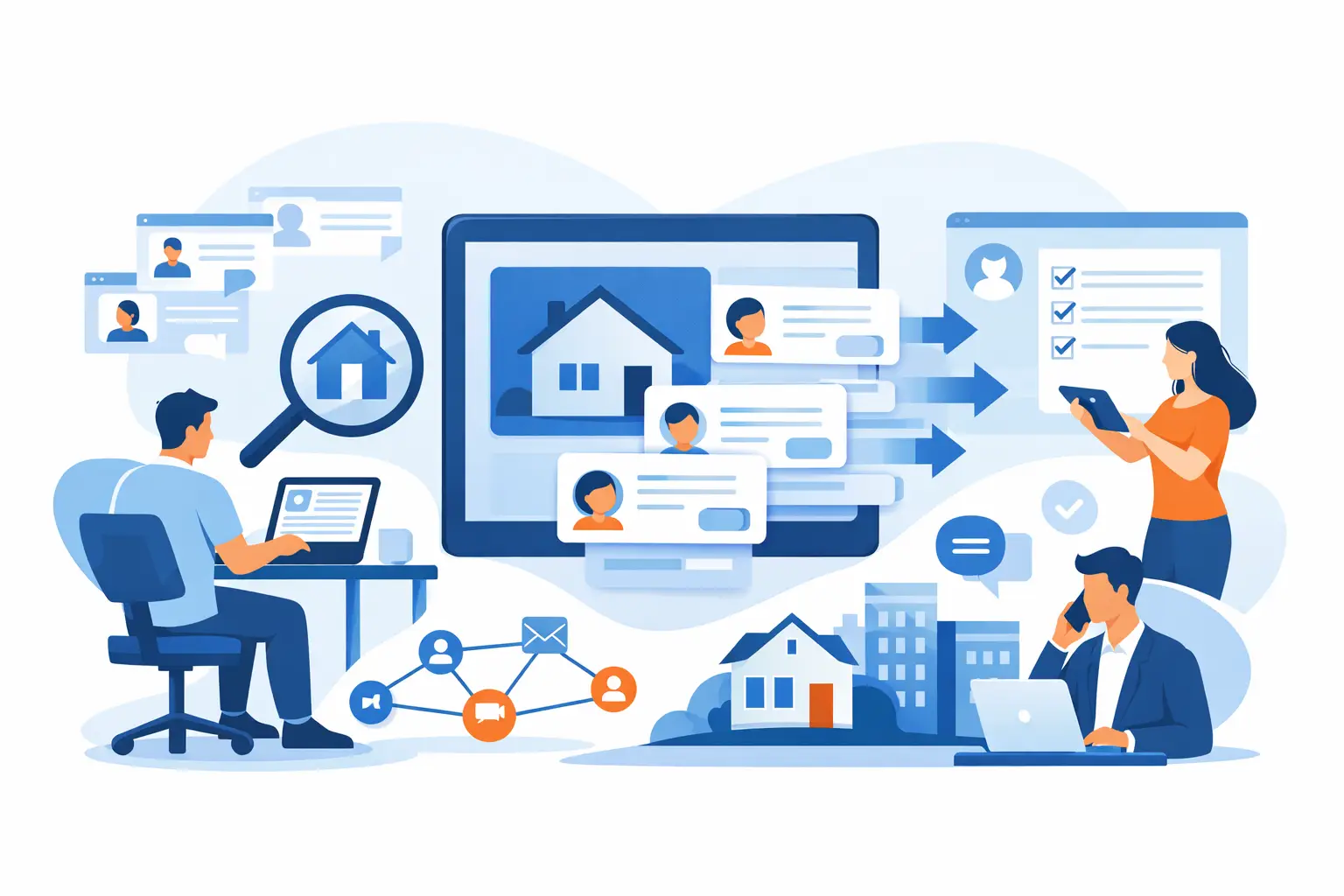
A missed call at 5.15pm can become three chaser emails by 9am the next day. Multiply that across maintenance requests, viewing questions, landlord updates, contractor queries and block management issues, and the cost is not just poor service. It is hours of duplicate admin, frustrated teams and a portfolio that feels harder to control than it should.
Knowing how to streamline property enquiries is therefore not about replying faster at any cost. It is about creating a reliable operational route from first contact to completed action, with the right person, information and next step visible throughout.
Start by separating enquiries from work
The biggest source of delay is often treating every incoming message as an isolated task. An email, phone call or portal message lands with an individual, who must interpret it, find the property history, decide who owns it, forward it and remember to follow up. The enquiry is handled, but the process is not managed.
Instead, treat each enquiry as the start of a workflow. Record the property, contact, issue type, urgency, channel and required action at the point it arrives. This creates a consistent handover whether the request came from a tenant reporting a leak, a landlord asking for an update or a leaseholder querying a service charge.
Not every message deserves the same process. A prospective tenant asking about availability needs a quick, useful response and a clear route to a viewing. A report of water coming through a ceiling needs triage, escalation and a documented audit trail. A landlord asking whether a repair has been completed needs visibility, not another call to the property manager.
Clear categories stop routine questions being treated as emergencies and genuine risks being left in a general inbox. They also reveal where demand is coming from. If one in five enquiries is a request for the same update, the issue may be a lack of proactive communication rather than staff capacity.
How to streamline property enquiries with triage rules
Triage should be simple enough for the whole team to use consistently. The aim is not to build a complicated decision tree. It is to make sure enquiries reach the right workflow without relying on someone’s memory or availability.
Set rules around enquiry type, urgency and ownership. For example, an urgent repair report can be acknowledged immediately, assigned to the relevant manager and converted into a task with a target response time. A standard maintenance query can be logged, checked against existing jobs and routed for review. A rent statement request can be directed to the finance process without passing through several inboxes first.
Good triage also protects staff time. If a team member receives a message that is not theirs to resolve, they should not need to investigate it before passing it on. The system should provide enough context to route it accurately from the start.
There is a trade-off here. Too few categories create vague queues and inconsistent decisions. Too many categories slow down the person logging the enquiry and lead to poor data. Begin with the issues that account for most contact volume, then refine the process using real enquiry data.
Define what counts as urgent
Urgency is where property teams can lose the most time and carry the most risk. Define urgent issues in writing and make the response route explicit. Gas safety concerns, flooding, security failures and serious loss of essential services should not sit alongside routine repair requests.
For each urgent category, set out who is alerted, what information must be captured, when a contractor is contacted and how the resident or landlord is updated. A rapid acknowledgement matters, but it is not enough on its own. The team needs proof that the issue is owned and progressing.
Capture the right information once
Repeated questions are often a symptom of incomplete intake. If the initial report does not include the property address, contact details, access restrictions, photographs, a description of the problem and the best time to attend, someone will need to chase those details later.
Use structured forms, call scripts or guided prompts to collect the information needed for the specific enquiry type. For a maintenance issue, that might include the affected room, whether the issue is worsening, whether there is an immediate safety concern and whether the tenant can provide access. For a block management query, it may include the development, flat number, account reference and the nature of the request.
This should not become an obstacle course for customers. Ask only for information that changes the next action. A tenant with an active leak should be able to report it quickly, while routine cases can follow a more detailed route.
When the information is captured in a shared record, staff do not have to search through call notes, personal inboxes and WhatsApp messages to reconstruct the story. That improves response quality as well as speed.
Automate acknowledgements, not judgement
Automation is most valuable when it removes predictable admin without making communications feel dismissive. An immediate acknowledgement can confirm that a report has been received, explain what happens next and set realistic expectations. It reassures the sender while giving the team time to assess the request properly.
Automated task creation is equally useful. Once an enquiry meets defined criteria, a task can be created for the right person with the property details, deadlines and supporting information already attached. The result is less copying and pasting, fewer forgotten follow-ups and a clearer record of responsibility.
AI call handling can extend this model outside office hours or during peak periods. It can capture the caller’s details, identify the nature of the request and direct urgent cases through the correct route. Used well, it prevents missed calls becoming a backlog for the following morning.
But automation should not make high-stakes decisions without oversight. A complex complaint, safeguarding concern, dispute or unclear emergency needs human judgement. Build an exception route so that uncertain or sensitive cases are flagged rather than forced into the wrong workflow.
Give every enquiry one visible home
Property communication becomes expensive when the same update is spread across email threads, phone notes, a CRM, contractor messages and individual team members’ memory. Nobody can confidently answer a simple question: what has happened, who owns the next step and when was the customer last updated?
A shared communication hub gives the team one operational view of each enquiry. It should show the original request, related tasks, updates, documents, conversations and status. This is especially valuable when staff are covering annual leave, managing a growing portfolio or working across lettings and block management teams.
The system does not need to replace every existing platform. In fact, forcing a wholesale software change can create more disruption than value. The stronger approach is to connect enquiry workflows with the CRM and finance systems your team already relies on, so property and contact data remains accurate without duplicate entry.
For landlords, visibility can remove a significant volume of inbound contact. A real-time dashboard showing open maintenance issues, completed work, key documents and current actions gives owners the reassurance they are usually seeking by phone or email. Transparency is not just a service feature. It is a capacity strategy.
Measure the bottlenecks, not only response time
Fast first responses are useful, but they can hide a weak process. An enquiry acknowledged in two minutes but unresolved for ten days is not a success. Measure the full journey: time to first response, time to assignment, time to resolution, number of chasers, reopened cases and enquiries by category.
Look for operational patterns. Are repair reports waiting too long before contractor instruction? Are landlords repeatedly asking for the same information? Do certain buildings produce a higher number of recurring issues? Are calls being missed at predictable times of day?
These figures help leaders make better decisions about staffing, supplier performance and process design. They also make the commercial case for automation clearer. If a team spends several hours each day manually logging, chasing and updating routine enquiries, the cost is measurable. Reducing that burden creates capacity without immediately adding headcount.
Build accountability into every handover
An enquiry should never disappear because somebody is busy, off sick or believes another colleague is dealing with it. Every open case needs a named owner, a next action and a target date. Team leaders need a clear view of items that are overdue, unassigned or waiting on an external party.
This is where operational discipline matters as much as software. Agree service standards, review exceptions and make it easy for staff to escalate a stalled case. A platform such as Prop Report can automate task creation, centralise communication and surface the information that needs attention, but teams still need clear ownership rules behind the technology.
The goal is not to make property management feel automated for its own sake. It is to give tenants, landlords, leaseholders and suppliers timely answers while giving your team fewer places to look, fewer updates to repeat and far more control over the work already in motion.
Start with the enquiry type causing the most friction this month. Map its current journey, remove one unnecessary handover, automate one repeatable step and make ownership visible. Small operational improvements compound quickly across a portfolio.