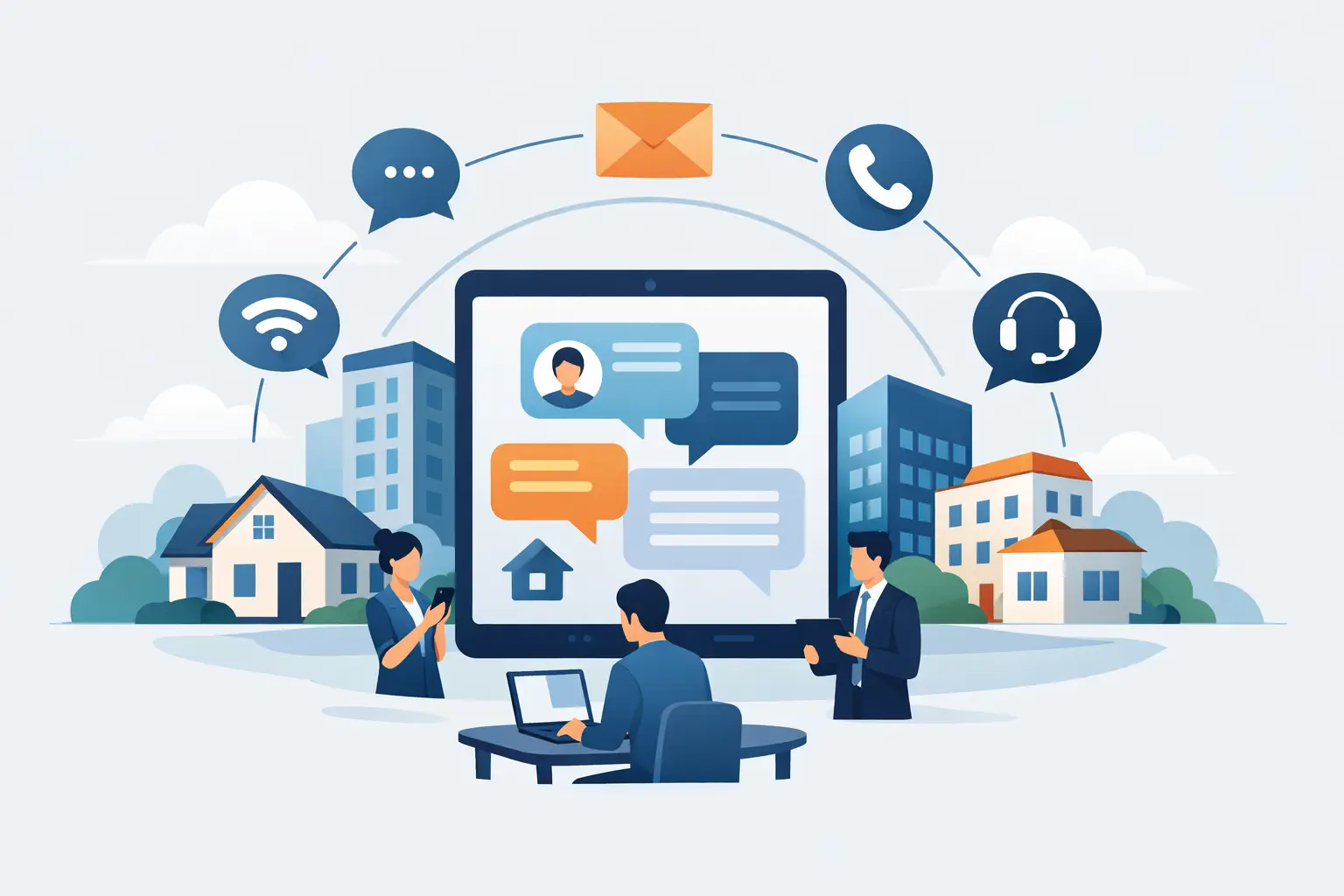
A maintenance query arrives by phone, the contractor replies by email, the landlord asks for an update by WhatsApp, and a colleague logs a note in the CRM two days later. That is the reality behind many property teams' communication problems. Learning how to centralise property communications is not about forcing every person into one channel. It is about creating one dependable operational record, so the right people can see what happened, what needs doing and who owns the next action.
For letting agents, block managers and portfolio landlords, fragmented communication is more than an inconvenience. It creates duplicate work, missed follow-ups, uncertain accountability and difficult conversations when a client asks for an update. A centralised approach gives teams control without adding another layer of administration.
What centralised property communications actually means
Centralisation does not mean asking tenants, leaseholders, landlords and contractors to stop using phone calls, email or messaging. Those channels will remain necessary. The objective is to capture relevant conversations and actions in one shared workspace, linked to the property, tenancy, block, unit or case they concern.
A useful system should show the full story: the original issue, messages exchanged, photos or documents supplied, tasks raised, appointments booked, contractor updates, costs and final resolution. Anyone taking over the case should be able to understand its status without searching personal inboxes or asking around the office.
This distinction matters. A shared inbox alone may reduce some email clutter, but it will not solve the operational problem if calls, tasks, supplier updates and landlord reporting still sit elsewhere. The central point must connect communication to workflow.
Start with the communication journeys that cause the most friction
Do not begin by trying to centralise every interaction at once. Start with the high-volume journeys where delays, duplication or poor visibility are already costing the business time.
For a letting agency, this might be repairs, rent arrears queries, move-in issues and landlord update requests. In block management, it may be communal repairs, contractor access, service charge questions, resident complaints and insurance matters. A portfolio landlord may prioritise maintenance approval, void-property activity and tenant contact.
Map each journey as it happens now. Where does the request first arrive? Who records it? Who decides what happens next? How is the landlord updated? Where does the final outcome sit? This exercise usually exposes the real problem: not too many messages, but too many hand-offs with no consistent ownership.
Then define a simple standard for each journey. A repair, for example, should have a named owner, priority, property reference, current status, next action and a complete communication trail. When those fields are clear, teams can work consistently even when volumes rise or staff are away.
Create one record per issue, not one record per channel
The most effective way to centralise property communications is to make the issue or case the organising principle. A leaking tap should not become one email chain, one call note, two messages and a separate contractor job. It should become one case with all related activity attached to it.
That record should be easy to find from the property file and, where relevant, the landlord, tenant, leaseholder or contractor profile. It should also carry enough context to prevent repetitive questions. If a contractor can see the access instructions, reported fault, images and previous correspondence, the property manager does not need to resend the same information.
This approach also improves service. Tenants and residents do not care which internal team holds the answer. They care that their issue is understood and progressed. A joined-up record makes replies quicker and more accurate.
Make ownership visible
Every open matter needs a clear owner, even when several people contribute. Shared communication without ownership can simply become a shared blind spot.
Use statuses that reflect real work, such as new, awaiting landlord approval, contractor appointed, awaiting access, work completed and closed. Avoid vague labels such as "in progress" where possible. They do not tell a manager what is blocking the next step.
Escalation rules are equally valuable. For instance, emergency repairs may need immediate routing, while a routine contractor quote awaiting approval could trigger a reminder after a defined period. The aim is not to automate judgement out of property management. It is to make sure routine follow-up does not rely on memory.
Bring calls, emails and messages into the same operational flow
Most property businesses cannot dictate how every stakeholder gets in touch. A tenant may phone at 8am, a landlord may email from abroad and a contractor may send updates between jobs. The practical answer is to capture the outcome of each interaction automatically where possible, then route it into the appropriate case or task.
AI call handling can help at the front door by recording the reason for a call, collecting essential information and creating a task or case for the right team. That is particularly useful for out-of-hours enquiries, busy maintenance lines and teams managing a large portfolio with limited administrative capacity.
Email should be associated with the relevant property or case rather than left in individual inboxes. For channels that cannot be fully integrated, create a simple discipline: log the meaningful outcome, not every word of the exchange. A note such as "Landlord approved works up to £500 at 14:20" is operationally useful. Copying an entire informal message thread often is not.
There is a trade-off here. Over-capturing can turn the system into another admin burden, while under-capturing leaves gaps in the record. Set a clear rule: record anything that changes the decision, commitment, deadline, cost, access arrangement or customer expectation.
Automate the repeatable steps, not the relationship
The best centralised systems remove repetitive work after a message arrives. A repair report can create a task, assign it by property or issue type, notify the responsible manager and prompt for landlord approval where spending exceeds an agreed limit. A completed contractor job can trigger a request for confirmation and move the case towards closure.
These workflows reduce the hidden cost of communication: the copying and pasting, chasing, forwarding and checking that takes place around every request. Across hundreds of properties, minutes saved on each routine interaction can release substantial time each month.
Automation must be designed around your operating rules. A small agency with one maintenance coordinator may need a straightforward process. A block management business handling statutory, safety or major-works matters will need more detailed approval paths and audit trails. Standardise what is repeatable, then leave room for experienced people to handle exceptions.
Give landlords visibility without creating more reporting work
Landlords often contact their managing agent because they cannot see what is happening. If updates are spread across emails and spreadsheets, the team is forced to compile answers manually, often at the busiest point of the day.
A live landlord dashboard changes that dynamic. It can give clients a current view of open maintenance, completed works, communication history, documents and costs without exposing internal notes or creating a constant stream of one-off update requests. This is not just a client-service feature. It protects operational time and makes accountability visible.
Visibility needs boundaries. Landlords should see information that supports confidence and decision-making, while internal discussions, sensitive tenant data and early-stage investigations remain appropriately controlled. Role-based access and clear data rules are essential, especially where multiple parties are connected to a block or portfolio.
Integrate rather than replace the systems that already work
Property teams rarely start from a blank page. Your CRM may hold tenancy and contact data, while finance software manages invoices, reconciliations and reporting. Replacing both to improve communications is often expensive, disruptive and unnecessary.
A more practical model is an operational layer that connects to existing systems. It uses the core property and contact data already held by the business, then coordinates communication, tasks, automation and visibility around the work itself. This reduces double entry while protecting the investment already made in established software.
Before choosing a solution, test the everyday details. Can it link a conversation to the correct property? Can it create and assign work automatically? Can it keep an audit trail? Can different teams see only what they need? Can it feed meaningful updates back to the CRM or finance system? These questions reveal whether a platform will reduce admin or simply move it.
Measure the operational change
Centralisation should produce evidence, not just a tidier inbox. Track how long it takes to acknowledge a new request, assign work, obtain approval and close a case. Monitor overdue tasks, reopen rates, landlord update requests and the proportion of communications recorded against the correct property.
Also measure the administrative time being avoided. If a manager spends ten minutes a day searching for updates or preparing landlord responses, that is more than three hours a month per person. Multiply that across a team and the commercial case becomes clear.
Prop Report is built for this operational gap: bringing communications, automated tasks and real-time landlord visibility together while working alongside the systems property professionals already use.
Centralising communications is ultimately a decision to make work visible. When every meaningful conversation leads to a clear record and next action, your team spends less time reconstructing the past and more time managing the property in front of them.