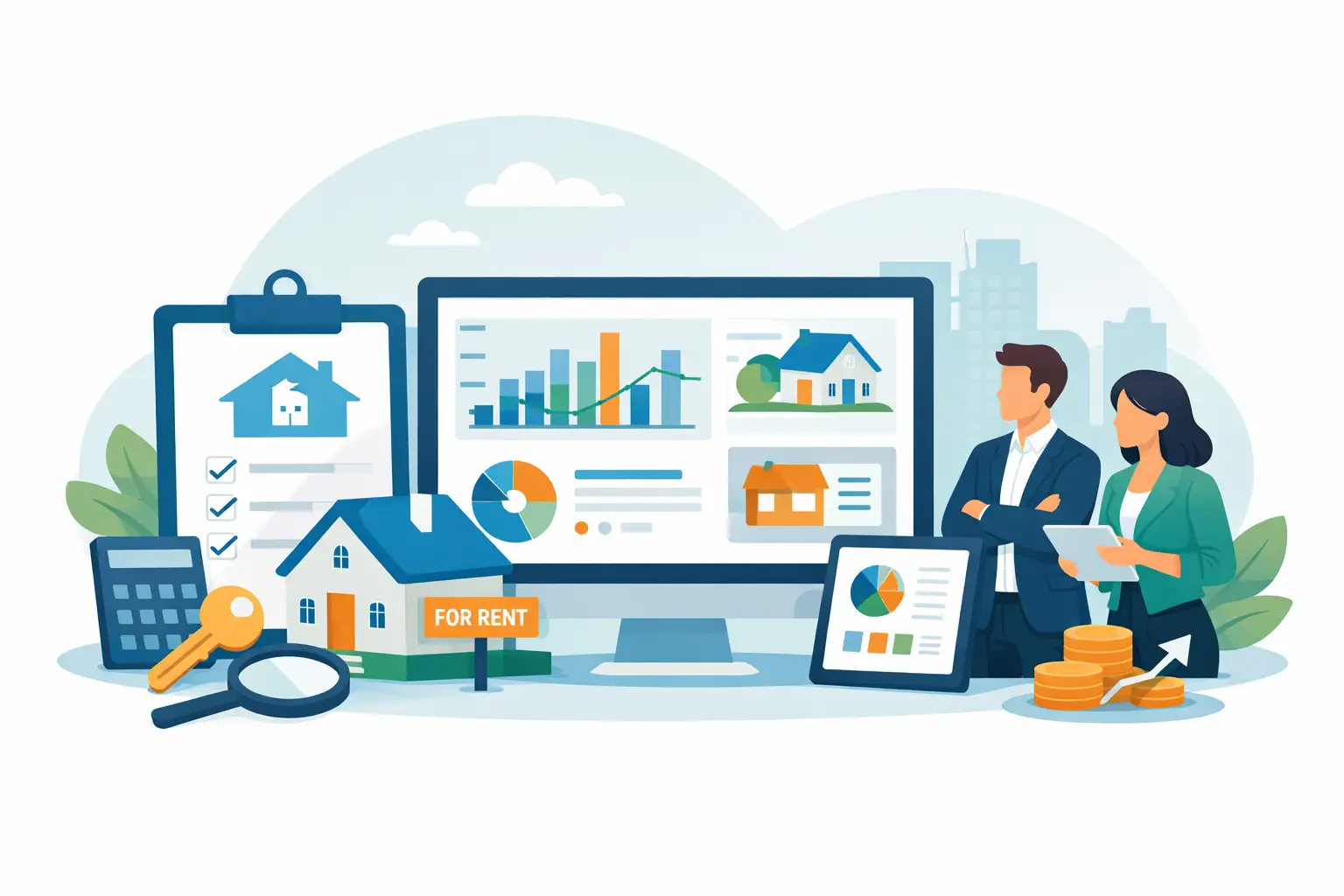
A landlord asks for an update on rent, maintenance, compliance and a contractor invoice - all before 10am. If your team has to check three systems, search two inboxes and ring the property manager to answer, the issue is not effort. It is visibility. That is exactly why landlord dashboard software UK agencies are adopting has moved from a nice extra to an operational necessity.
For letting agents, block managers and portfolio landlords, the real value of a dashboard is not the screen itself. It is what sits behind it. A useful dashboard gives landlords a clear view of what matters without creating more work for your team. A poor one simply repackages scattered data and still leaves staff chasing updates manually.
What landlord dashboard software UK businesses actually need
The phrase gets used loosely, but not every portal or reporting tool counts as landlord dashboard software. In practice, UK property professionals need a system that gives landlords immediate access to relevant information while reducing the admin load on the office.
That means more than a branded login. It means drawing together rent status, maintenance activity, compliance records, property performance and communication history into one place. If your staff still have to prepare updates manually before the dashboard looks useful, the software is not solving the problem. It is just moving it around.
The best platforms do two jobs at once. First, they improve landlord transparency. Second, they cut internal handling time by automating the repetitive work that usually sits behind reporting, chasing and status updates. Those two outcomes matter together. Landlords want visibility, but agencies need that visibility to be efficient, accurate and scalable.
Why landlords ask for dashboards in the first place
Most landlords are not asking for software. They are asking for certainty. They want to know whether rent has been paid, whether repairs are moving, whether certificates are up to date and whether their portfolio is being actively managed.
Without a dashboard, those questions become a steady stream of calls, emails and ad hoc report requests. Each one looks small on its own. Across a portfolio, it becomes a serious operational cost. Teams lose time answering the same questions, often with slightly different data pulled from different places.
A dashboard changes the service model. Instead of the landlord depending on your staff for routine updates, they can self-serve much of the information they need. That does not reduce service quality. Done properly, it improves it. Your team has more time for exceptions, decisions and higher-value conversations rather than status chasing.
There is also a commercial angle. Better landlord visibility supports retention. When clients can see activity, progress and accountability, they are less likely to assume nothing is happening. In a competitive market, perceived control matters almost as much as actual performance.
The difference between a dashboard and a portal
This is where many software evaluations go wrong. A basic portal may allow document sharing or message exchange. That is useful, but it is not enough for busy operations teams.
A true dashboard should show live operational information in a format that is easy for landlords to understand and easy for agencies to maintain. The key test is simple: does it reduce inbound queries and repetitive admin, or does it create another channel to monitor?
If a system gives landlords access but leaves your team updating notes manually, uploading reports one by one or duplicating tasks in separate software, the efficiency gains will be limited. For most UK agencies, especially those managing volume, the dashboard only works if it is tied to workflow automation and connected data.
Features worth prioritising in landlord dashboard software UK buyers are comparing
The strongest systems tend to combine visibility, communication and automation rather than treating them as separate functions. That usually starts with real-time reporting. Landlords should be able to see current rent positions, arrears indicators, maintenance status and property-level activity without waiting for a monthly statement.
Shared communication is just as important. When emails, call notes, updates and task history are centralised, your team can respond faster and landlords get a clearer record of what has happened. This also reduces the risk of information sitting with one staff member rather than within the business.
Automated task creation makes a bigger difference than many buyers expect. If incoming issues can trigger actions, assign responsibility and update the landlord view automatically, admin drops sharply. The dashboard then becomes a live reflection of work in progress rather than a static reporting layer.
Integration matters too. Most property businesses do not want to replace their CRM, finance package or existing management tools overnight. The more practical route is software that sits over the top operationally, pulling information together and making it more useful. For many firms, this is the difference between adoption and shelfware.
Where the return on investment really comes from
The obvious gain is time saved on landlord updates. But the full return is broader than that.
A good dashboard reduces duplicated communication, shortens response times and cuts the amount of manual coordination needed between property managers, accounts teams and administrators. It also improves consistency. When landlords are viewing the same central data source your team is using, there is less room for mixed messages or outdated information.
There is a staffing benefit as well. Lean teams are under pressure to handle more units without compromising service. Dashboard software helps by reducing low-value contact volume and making internal workflows easier to manage. That creates capacity without immediately adding headcount.
The financial impact can be significant, but it depends on how the software is implemented. If the dashboard is connected to your operations and used actively, savings compound quickly. If it is treated as a standalone landlord-facing feature, results tend to be modest.
Trade-offs to think about before you buy
Not every landlord needs the same level of reporting. Some want a high-level overview. Others expect detailed updates across maintenance, compliance and tenancy activity. The right dashboard software should let you present useful information without overwhelming the user or exposing irrelevant internal detail.
There is also a balance between transparency and operational control. More visibility is usually better, but raw data without context can create unnecessary questions. A dashboard should help landlords understand what is happening, not simply present a stream of unresolved activity.
Implementation is another common sticking point. Even strong software can disappoint if the underlying workflows are disorganised. Before rolling out a dashboard, agencies should be clear on where information comes from, who owns updates and how communication should be logged. Software improves process. It does not replace the need for one.
What good adoption looks like
The businesses that get the most from landlord dashboard software UK-wide usually treat it as part of a wider operational change. They do not just offer landlords a login and hope for the best. They reshape how updates are handled internally so the dashboard becomes the default source of truth.
That often means standardising task flows, centralising communication and connecting existing systems rather than relying on staff memory or inbox searches. Once that foundation is in place, the landlord experience improves naturally. Updates are faster, reporting is clearer and teams spend less time answering routine requests.
This is where platforms such as Prop Report fit well. The value is not just landlord-facing visibility. It is the combination of dashboard access, automated workflows, shared communication and integration with existing systems. For agencies and managers under pressure to do more with leaner teams, that operational layer is where the real gain sits.
How to judge whether a platform is right for your portfolio
Start with your current pain points, not the feature list. If landlord calls and emails are eating hours every week, focus on visibility and communication history. If maintenance updates are the main friction, look closely at task automation and live status tracking. If your team already has core systems in place, integration should be near the top of the list.
It is also worth looking at how quickly staff can use it day to day. A dashboard should make work simpler, not add another place to check. Ask whether the software reduces admin at source, whether landlords will genuinely use it, and whether the information shown will stay accurate without manual effort.
The best choice is rarely the one with the longest feature sheet. It is the one that fits your operating model and removes work your team is currently doing by hand.
Landlords do not measure service by how many systems you own. They measure it by speed, clarity and confidence. If your team can provide all three without adding more admin, you are not just improving reporting - you are building a more resilient property operation.