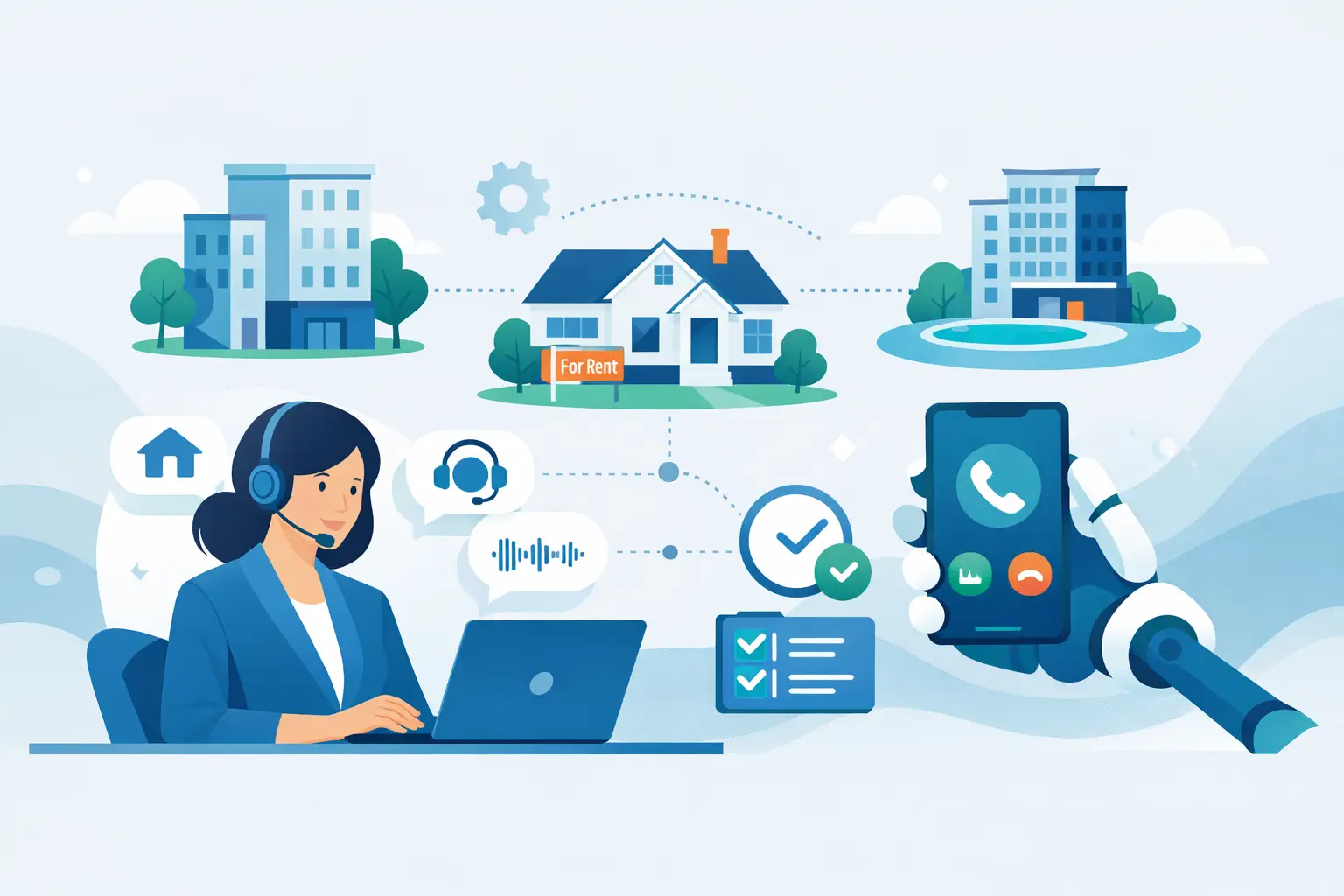
A missed call about a leaking pipe, a tenant locked out of their flat or a contractor waiting for access is not simply an unanswered phone. It is a potential complaint, a delayed repair and another item somebody must chase later. Automated property call handling gives property teams a practical way to capture the request, identify the urgency and move it into the right workflow without relying on a team member to be free at that exact moment.
For letting agents, block managers and portfolio landlords, the benefit is not replacing valuable conversations with a machine. It is removing the repetitive call traffic that prevents people from progressing tenancies, managing contractors, resolving complex cases and building stronger client relationships.
The operational cost of unanswered calls
Property calls rarely arrive at convenient times. They come while a negotiator is on a viewing, an administrator is updating tenancy records or a block manager is dealing with an urgent site issue. When the phone rings repeatedly, the team loses focus. When it is not answered, the work does not disappear. It returns as a voicemail, a follow-up email, a duplicate call or an escalation from an unhappy tenant or landlord.
The cost accumulates quickly. A short call may take three minutes, but the true handling time includes finding the record, writing notes, forwarding the issue, creating a task and checking whether somebody has responded. Across a busy portfolio, this can consume hours each week in administration that adds little value to the customer or the business.
The bigger issue is visibility. If information lives in voicemail inboxes, handwritten notes and individual staff members' memories, managers cannot see the volume or type of demand coming into the business. Recurring repair queries, out-of-hours access requests or calls from one development may point to an operational problem. Fragmented call handling hides that evidence.
What automated property call handling should do
Effective automated property call handling is a controlled intake process, not a generic telephone menu. It should understand the reason for the call, gather the details needed for action and direct the request according to rules set by the property business.
Capture the right information first time
A useful call flow starts with identification. It should establish whether the caller is a tenant, landlord, leaseholder, contractor or prospective client, then collect the property address and the nature of the request. For a repair, that may include the affected room, whether there is an immediate risk and whether the caller can safely isolate the issue.
This reduces the back-and-forth that occurs when a vague message reaches the maintenance team. Instead of “tenant called about a problem”, the team receives structured information that supports a faster first decision.
Separate urgent issues from routine requests
Not every repair is an emergency, and treating all calls as one creates avoidable pressure. A reported gas smell, major water leak or loss of essential access needs immediate escalation through a defined procedure. A query about a rent statement, a non-urgent repair update or a request for a copy document can enter a standard queue.
Automation must be designed around the agency's own escalation policy, approved contractors and emergency contacts. Clear wording matters. The system should never give callers the impression that an urgent safety issue is being parked for later.
Turn calls into accountable work
The strongest operational gain comes after the call. Relevant information should create a task, assign an owner or queue, record the interaction against the appropriate property or contact, and notify the people who need to act. Where the existing CRM and finance systems hold the core record, the call-handling layer should work with them rather than force staff to duplicate data.
That is the difference between an automated answer and an operational workflow. The first reduces interruptions. The second makes sure the request has a visible next step.
Where the value appears across a portfolio
The immediate benefit is better call coverage, particularly during busy periods and outside normal office hours. A tenant can report an issue when it happens, rather than waiting until the next morning and calling repeatedly. A contractor can leave the required access details without tying up a property manager. A landlord can ask for an update and be directed to the right route rather than passed between departments.
For teams, the improvement is more controlled work. Administrators are not constantly switching from a tenancy renewal to an unrelated maintenance query. Property managers begin the day with a prioritised list of recorded actions, rather than a collection of voicemails that must be interpreted and redistributed.
There is also a commercial case. If a team saves even a few minutes on each routine call, that time can be redirected towards arrears follow-up, compliance checks, inspections and service delivery. The exact saving depends on call volume and current processes, but the calculation should include the admin after the call, not just the conversation itself. That is where hidden cost tends to sit.
Landlords benefit from clearer accountability too. When communication and actions are recorded in one place, it becomes easier to show what was reported, when it was logged and what happened next. A real-time landlord dashboard can extend that visibility without requiring staff to provide the same update repeatedly by phone or email.
Designing a call flow your team will trust
Automation only works when it reflects real operations. Before implementing it, review a representative sample of calls from the last month. Identify the repeatable categories, the information staff need to collect and the points where callers need a human response. This gives the workflow a practical foundation instead of building it around assumptions.
Keep the initial call experience short. Callers should not have to navigate a long sequence before reporting a problem. Ask only for information that changes the next action, then use property and contact data already held in connected systems where possible.
Ownership is equally important. Every route needs a named team, response expectation and escalation path. A maintenance request without an assigned queue is still a maintenance request waiting to be missed. A landlord query that is logged but not visible to the account manager creates a different version of the same problem.
Test the exceptions before going live. Try an urgent repair, an incomplete address, a caller who is not on record, a contractor requesting access and a tenant who needs a person rather than an automated route. These scenarios reveal where the wording, hand-off process or system rules need improvement.
Prop Report is designed to make this kind of workflow useful beyond the phone call itself, connecting call handling to automated task creation, shared communication and property-level visibility. The aim is not another disconnected tool. It is a clearer operating layer around the systems your business already relies on.
Measure more than calls answered
Answer rate is useful, but it is not enough. A call can be answered quickly and still lead to poor service if the information is incomplete or the task sits unassigned. Track how many calls are converted into correctly categorised actions, the time to first response, the time to resolution and the number of callers who need to chase an update.
Look for patterns by property, category and time of day. If one block creates an unusual number of calls about communal heating, that is information for the managing agent and contractor strategy. If routine landlord update calls are rising, the issue may be reporting visibility rather than staff availability.
It is also worth monitoring transfers to a human. A high transfer rate is not automatically a failure. Some calls should reach a person. However, a high rate for simple requests may show that the call flow is unclear, collecting the wrong data or failing to connect with the right records.
When automation is not the answer
Automated handling should not become a barrier between the business and people who need help. Sensitive complaints, safeguarding concerns, complex tenancy disputes and high-value client conversations often need judgement, reassurance and direct ownership. The system should recognise those cases and make escalation easy.
The right balance depends on your portfolio, staffing model and service promise. A small agency with low call volume may begin with out-of-hours triage. A larger lettings or block management operation may automate a wider range of routine requests. In both cases, the standard should be the same: callers receive a clear route, and the team receives useful, actionable information.
When every call becomes organised work rather than another interruption, the phone stops dictating the day. Your team gets more control of its workload, while tenants, landlords and contractors get a response they can rely on.